
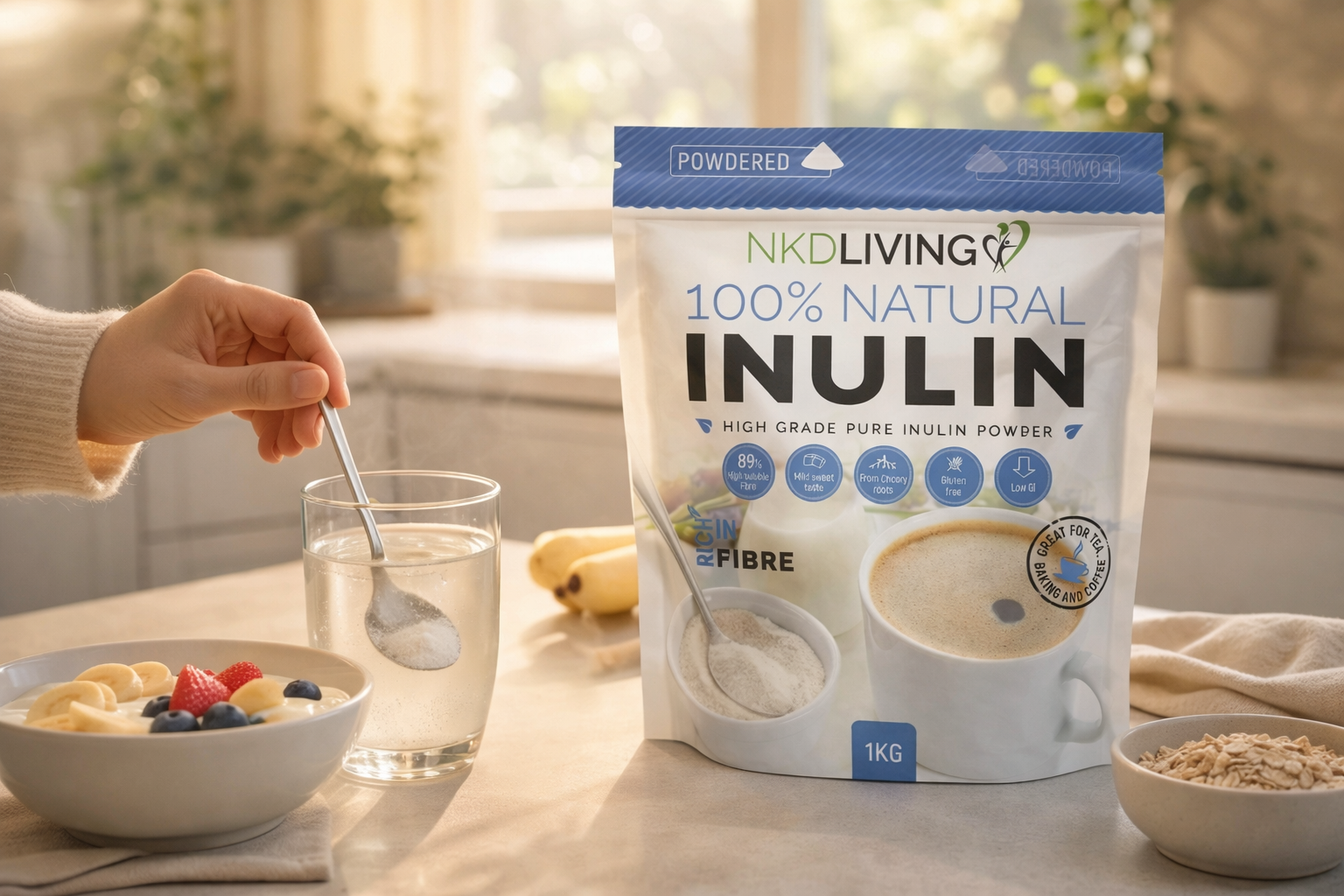
Inulin: What It Is, How to Start, and What You May Notice Over Time
If you’ve been trying to support your digestion in a gentler, more natural way, inulin is one of those small changes that can make a meaningful difference over time.
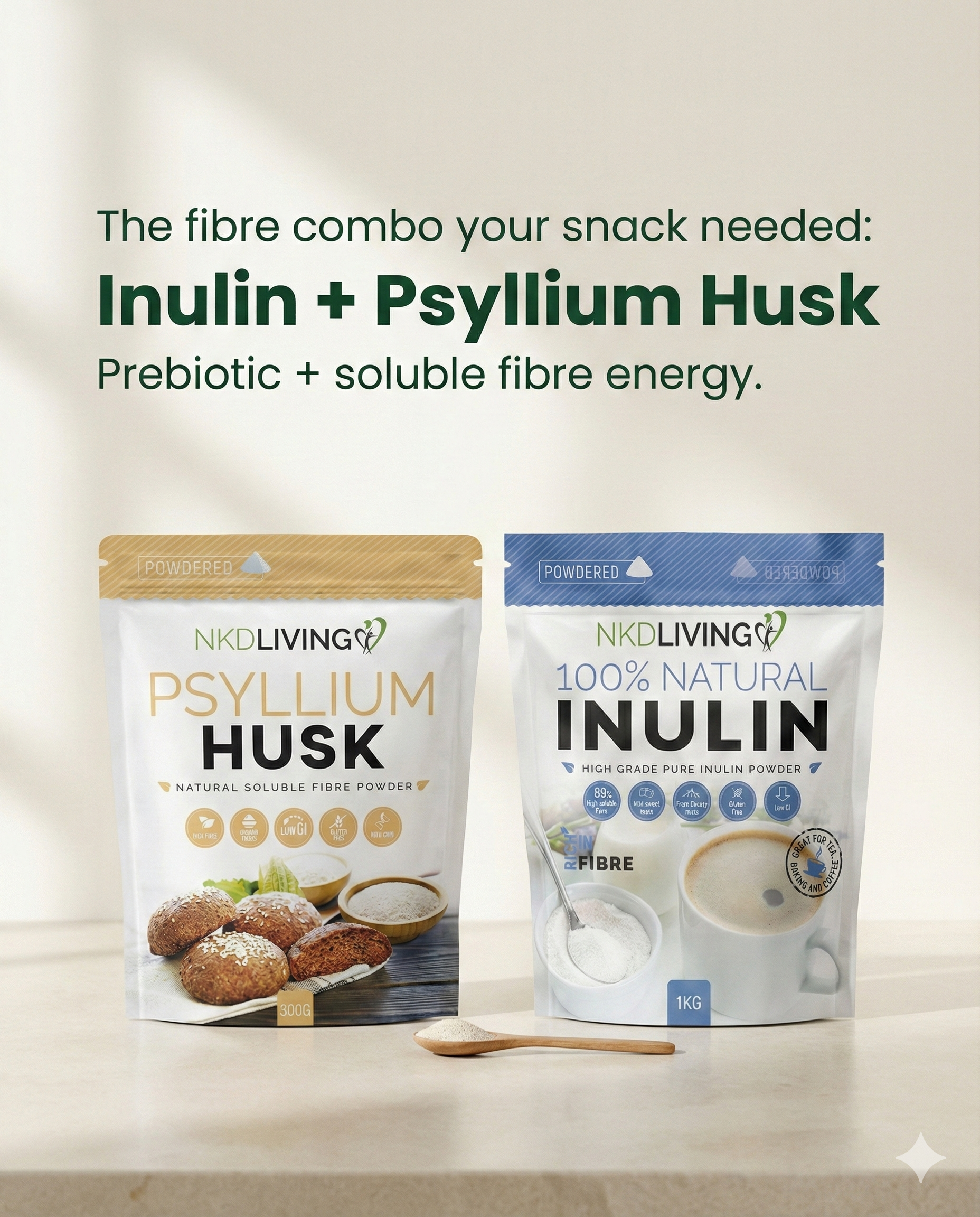
Inulin is a type of soluble prebiotic fibre. That means it helps feed beneficial bacteria in the gut rather than being fully digested by your body. Because of that, it may support bowel regularity, satiety, and a healthier gut environment — but like many fibres, it works best when you start slowly.
What is inulin?
Inulin is a prebiotic fibre found naturally in certain plants and commonly used to support gut health. Research shows that inulin-type fructans can increase beneficial bacteria such as Bifidobacteria, and some studies have also found increases in short-chain fatty acids, which are involved in gut function and signalling in the body.
How much should you start with?
The biggest mistake people make with inulin is taking too much too quickly.
A gentle starting point is:
-
3–5 g per day to start
-
then gradually increase to 5–10 g per day depending on comfort and tolerance
Starting low matters because inulin is fermentable. As gut bacteria break it down, gas and bloating can happen early on, especially in people with sensitive digestion.
What you may notice over time
Days 1–3
At the beginning, some people notice:
-
more gas
-
bloating
-
mild digestive discomfort
This early discomfort usually happens because gut bacteria are fermenting the fibre. It doesn’t necessarily mean inulin is “bad” for you — it often means your system is adjusting.
Days 3–7
As your body adjusts, digestion may begin to feel more supported. Some people notice:
-
more regular bowel movements
-
softer stool
-
less straining
That lines up with how soluble fibres can help support stool consistency and bowel regularity.
Weeks 1–2
Over the first one to two weeks, the gut microbiome may begin shifting toward a more favourable balance. In particular, studies on inulin-type fructans have found increases in Bifidobacteria, a group of bacteria commonly associated with gut health.
Weeks 2–4
At this stage, some people report:
-
fewer sugar cravings
-
feeling fuller for longer
-
slightly better appetite control
That may happen because fibre can slow digestion and support fullness. Some early metabolic markers, such as fasting insulin or HOMA-IR, have also improved in certain studies, although results are not identical across all populations.
Weeks 4–8
With consistent use, inulin may continue supporting:
-
gut health
-
appetite regulation
-
bowel regularity
Some studies also suggest broader benefits related to metabolic health, though the exact effect depends on the person, their diet, and the amount used.
Can inulin affect mood?
Possibly — but subtly.
The gut and brain are closely connected, and prebiotic fibres like inulin may influence that relationship through changes in the microbiome and the production of compounds such as short-chain fatty acids. Reviews of prebiotic research suggest this gut-brain pathway may affect stress response, emotional processing, and overall mental wellbeing, but the effects are usually modest rather than dramatic.
A realistic way to think about mood is this:
Week 1
You’re more likely to notice digestive changes than emotional ones.
Weeks 2–3
As the gut starts adjusting, some people may notice:
-
slightly calmer digestion
-
fewer sugar cravings
-
more stable energy between meals
These shifts can feel small, but they often come before anything that feels like a “mood benefit.”
Weeks 4–6
If inulin is suiting you well and your overall habits are supportive, some people describe:
-
less irritability
-
steadier energy
-
slightly better sleep
-
feeling a bit more balanced overall
The key word is subtle. Inulin is not a dramatic mood changer on its own.
Important reality check
Inulin works best as part of a wider lifestyle picture.
Gut-brain support is usually stronger when several things are working together:
-
enough protein
-
good sleep
-
movement
-
a varied, fibre-rich diet
-
consistent daily habits
So while inulin may support the foundation, it is usually not the whole answer by itself.
Signs your gut may be responding well
Some subtle signs people notice before any bigger change include:
-
fewer sugar cravings
-
calmer digestion after meals
-
more stable energy
-
better bowel regularity
-
improved fullness between meals
These are often the first encouraging signs that your routine is becoming more supportive.
A note of caution
Inulin is not suitable for everyone in the same way. Because it is a fermentable carbohydrate, it may aggravate symptoms such as gas, bloating, pain, or bowel upset in people with IBS or FODMAP sensitivity. If you have a sensitive gut, it’s wise to start very small — or speak with a qualified health professional before using more.
The gentle approach
The best way to use inulin is not to rush it.
Start small. Stay consistent. Let your body adapt.
Sometimes the most powerful health changes do not feel dramatic at first. They feel quieter than that:
a calmer stomach, steadier energy, fewer cravings, and a body that starts to feel a little more in balance.
Looking to add more fibre to your routine in a simple, gentle way? Explore Pure Vibes Inulin and start with a small daily amount that works for your body.







 Home
Home  Whishlist
  Compare
  Checkout
  Account