

Psyllium Husk: What It Does, How to Take It, and What to Expect
If your digestion has felt inconsistent lately — constipated one week, too loose the next, or just not quite settled — psyllium husk is one of the simplest fibres to know. It is a soluble, gel-forming fibre from the husk of Plantago ovata. When mixed with water, it forms a soft gel that helps stool hold water and move more comfortably through the gut. That same gel-forming action is also why psyllium is studied for LDL cholesterol and blood sugar support.
At Pure Vibes, this kind of ingredient fits the brand perfectly: a small pantry swap that feels simple enough for real life, not a health lecture.
Pure_Vibes_Instagram_Playbook
What is psyllium husk?
Psyllium husk is a natural fibre supplement made from the outer husk of Plantago ovata seeds. It is used as a bulk-forming fibre because it absorbs water and thickens into a gel. In practical terms, that means it can help soften hard stool, add form to loose stool, and support more regular bowel movements overall.
One important detail: psyllium is not the same as highly fermentable fibres like inulin. It is often better tolerated by many people with IBS than more gas-forming fibres, although some people still experience bloating or distension, especially at the beginning.
Why people use it
1) For constipation and bowel regularity
This is the best-known use. Psyllium helps increase stool bulk and improve stool consistency, which can make bowel movements easier and more regular. In trials and meta-analyses, fibre supplementation improves constipation overall, and psyllium is one of the better-supported fibre types for this purpose.
2) For loose stools too
Psyllium is unusual because it can help at both ends of the spectrum. Since it forms a gel and increases stool viscosity, it can also help make loose stools firmer. That is one reason it is sometimes recommended when digestion feels unpredictable rather than simply “too slow.”
3) For cholesterol support
Psyllium has some of the strongest evidence among fibre supplements for lowering LDL cholesterol. Meta-analyses of randomized trials found significant reductions in LDL and total cholesterol, especially with regular use over a few weeks. The FDA also allows an authorized health claim linking soluble fibre from psyllium husk with reduced risk of coronary heart disease when used appropriately.
4) For blood sugar support
Because the gel slows digestion, psyllium can help reduce how quickly glucose enters the bloodstream after a meal. A meta-analysis found the clearest benefits in people with type 2 diabetes, with improvements in fasting blood glucose and HbA1c in multiweek studies; effects in people without diabetes were smaller. That makes psyllium a helpful support tool, not a substitute for medication or medical care.
5) For fullness and appetite awareness
Psyllium may help some people feel fuller between meals. Controlled trials have shown lower hunger and greater fullness with psyllium compared with placebo, but evidence for meaningful weight loss is mixed. It is better thought of as a routine-support fibre than a dramatic slimming product.
What makes psyllium different from other fibres?
Not all fibres behave the same way. Psyllium is especially useful because it is viscous and gel-forming. That gives it a stool-softening effect in constipation, a stool-firming effect in diarrhea, and a slowing effect on carbohydrate absorption. Reviews comparing fibres note that psyllium performs differently from fibres such as finely ground wheat bran, which do not always have the same stool-softening benefits.
For people with sensitive digestion, that difference matters. Monash notes that psyllium is often better tolerated in IBS than rapidly fermentable fibres like inulin or FOS, though tolerance still varies from person to person.
How to take it
The smartest approach is to start low and go slowly. Cleveland Clinic advises starting with a small amount, around 1 teaspoon, then increasing gradually as needed. MedlinePlus emphasizes taking psyllium with at least 8 ounces / 240 mL of liquid, because too little fluid raises the risk of choking or worsening constipation.
For your website, I’d phrase it simply like this:
A gentle beginner approach
-
Start with ½ to 1 teaspoon
-
Mix it into a full glass of water
-
Drink it immediately
-
Follow with another glass of water if needed
-
Increase slowly only if your body is handling it well
That wording stays practical and cautious while matching the evidence on gradual dosing and hydration.
Easy ways to use psyllium husk
Psyllium can be used in more than one way:
-
stirred into water and drunk immediately
-
added to smoothies
-
mixed into yogurt or oats
-
used in gluten-free or low-carb baking as a binder
-
added in small amounts to help thicken recipes
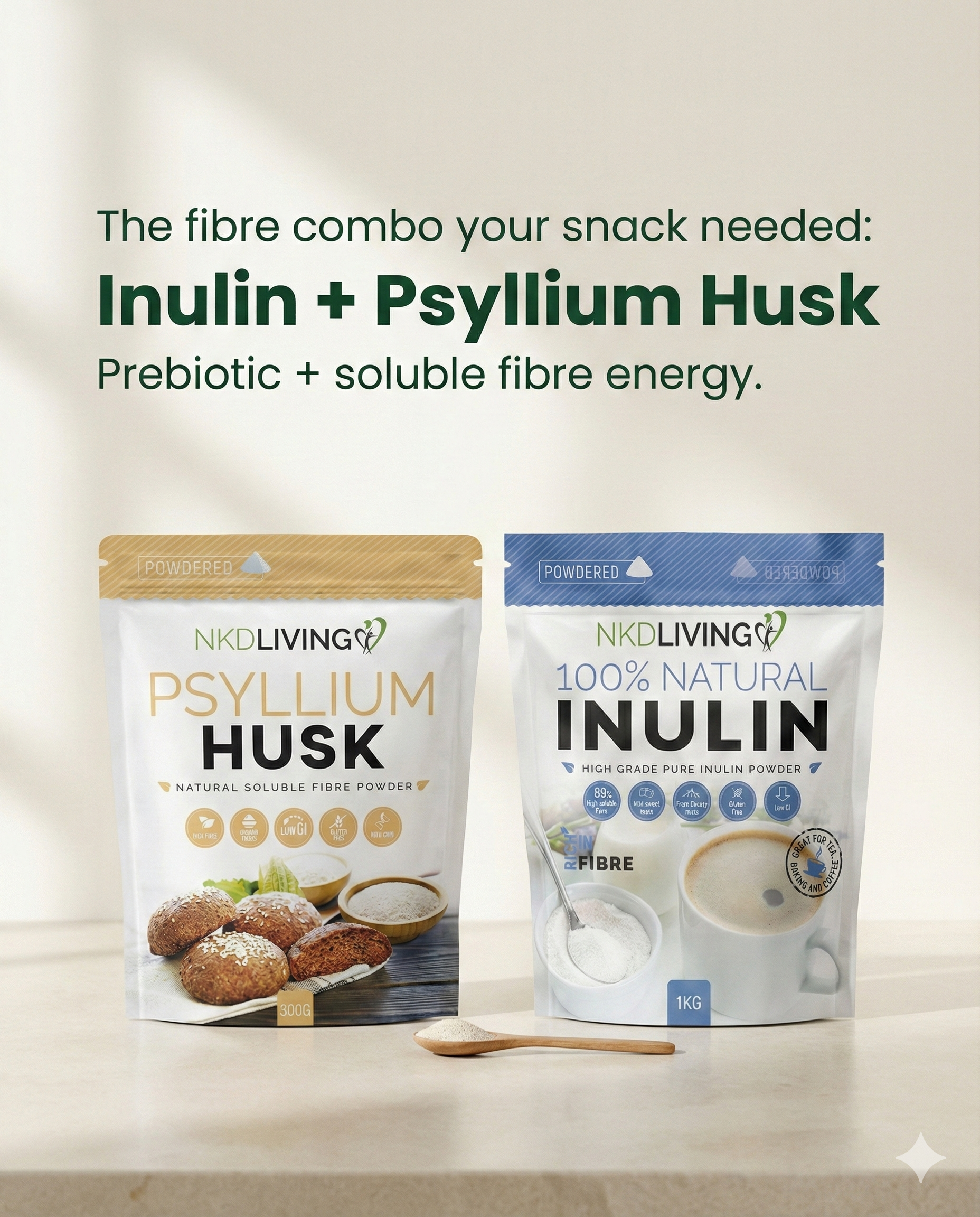
Cleveland Clinic notes that psyllium can be added to drinks or foods and used as a gum in gluten-free baked goods. Since your NKD Living product is a powder, it should blend more easily than whole husks — but it also thickens fast, so it is best not to let it sit too long before drinking.
What you may notice at the start
The first few days can feel a little different. Common early side effects include:
-
bloating
-
gas
-
stomach discomfort
-
changes in stool consistency
These effects are usually mild, especially when you start with a small dose and build slowly. Meta-analysis data also show that flatulence is more common when fibre supplements are introduced.
When to be careful
Psyllium is generally considered safe for many adults, but there are situations where extra caution matters.
You should be careful or speak to a healthcare professional first if you:
-
have difficulty swallowing
-
have an intestinal blockage or narrowing
-
are pregnant or breastfeeding
-
take prescription medicines that may need separation from psyllium
-
have a sensitive gut and want help choosing the right starting dose
MedlinePlus specifically warns about swallowing problems, bowel blockage concerns, pregnancy and breastfeeding questions, and certain medication interactions. It also advises not taking some medicines, such as digoxin, salicylates or nitrofurantoin, within 3 hours of psyllium.
Important: take psyllium with enough water, start low, and separate it from medicines unless your clinician or pharmacist tells you otherwise.
Is it a miracle fix?
No — and that is actually the helpful truth.
Psyllium can be a very useful support tool for digestion, stool consistency, cholesterol and blood sugar, but it works best as part of a bigger routine: enough fluids, a generally fibre-aware diet, movement, and consistent habits. It is not a replacement for diabetes medication, cholesterol medication or medical advice when those are needed.
The simple takeaway
If you want one fibre that is practical, evidence-backed, and versatile, psyllium is a strong place to start. It can help bring more consistency to your digestion, support a healthier rhythm in the gut, and offer added support for LDL cholesterol and blood sugar when used regularly and correctly. The secret is not taking loads of it — it is starting gently, drinking enough water, and being consistent.
Medical disclaimer
This article is for general education and is not medical advice. Psyllium is a dietary supplement, not a substitute for prescribed treatment. If you are pregnant, breastfeeding, have swallowing or intestinal conditions, or take regular medication, speak to a qualified healthcare professional before using it.
Sometimes the best health swaps are the ones that feel easiest to keep up with. Ready to start gently? WhatsApp 0799 742743 to order NKD Living Psyllium Husk Powder.







 Home
Home  Whishlist
  Compare
  Checkout
  Account